
Is My Roof Asbestos? How to Identify Super Six, Decramastic and Fibrolite Roofs
Identify Super Six, Decramastic and Fibrolite Asbestos Roofs
If your Auckland home was built or re-roofed before the late 1980s, there is a real chance the roof over your head contains asbestos. Most people first ask the question when they are about to clean the roof, sell the house, install solar, or get a quote for re-roofing.
This guide shows you exactly what to look for on the three asbestos roofing products that dominate New Zealand housing: Super Six corrugated sheet, Decramastic pressed-metal tiles and flat fibrolite sheet. It also explains what never to do to a suspected asbestos roof, how testing works, and how to get a free identification check from our team without anyone climbing on the roof.
Request A free Quote Today!
Why so many Auckland roofs contain asbestos
New Zealand manufactured asbestos-cement building products locally for half a century. James Hardie opened its Penrose factory in 1938 and produced asbestos-cement roofing, cladding and pipes there until 1987. Through the 1950s, 60s and 70s, asbestos-cement was the cheap, fireproof, low-maintenance choice for state houses, brick-and-tile bungalows, garages, sleepouts, farm sheds and factories right across the region, from Glenfield and Birkenhead on the North Shore to Manurewa, Mangere and Otara in the south.
The key dates matter when you are trying to date your own roof. Imports of raw blue and brown asbestos were banned in 1984. Local manufacture of asbestos-containing materials wound down in 1987. Raw white asbestos (chrysotile) was not banned until 1999, and the import of finished asbestos-containing products was only prohibited in October 2016. That is why WorkSafe’s advice is to treat any building constructed or renovated before 2000 as potentially containing asbestos-containing material (ACM).
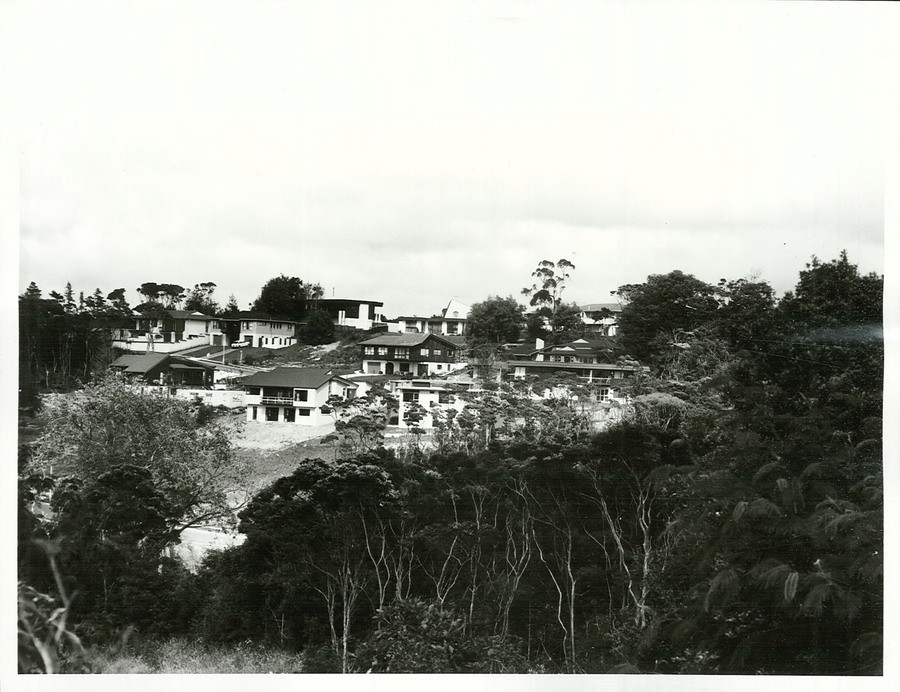
Chatswood, North Shore, 1975. Subdivisions from this era are where we find most asbestos roofs today. Photo: Archives New Zealand, CC BY 2.0.
Quick check: how likely is your roof to be asbestos?
| If your house or roof dates from | Likelihood the roof is asbestos | What we usually find |
|---|---|---|
| Before 1950 | Moderate | Original iron or tile roofs, often replaced; fibrolite cladding and soffits common; asbestos-cement gutters and downpipes. |
| 1950 to 1975 | High | Super Six corrugated sheet on garages, sheds, flat-roofed and modernist homes; fibrolite soffits, gable ends and wet-area linings. |
| 1975 to 1985 | High | Decramastic pressed-metal tiles at their peak (asbestos in the bitumen coating); late Super Six; fibrolite still in use. |
| 1985 to 2000 | Low to moderate | Most local products asbestos-free after 1987, but imported sheet and leftover stock were still installed. Assume ACM until tested. |
| After 2000 | Very low | Roofing installed after 2000 is almost never ACM, but check whether the roof is original or a re-roof over older material. |
What does a Super Six roof look like?
Super Six was James Hardie’s trade name for its large-profile corrugated asbestos-cement sheet in New Zealand and Australia (the UK equivalent is called Big Six). It is the product most Aucklanders mean when they say “asbestos roof”. If you know what to look for, Super Six is the easiest of the three to recognise from the ground.
The profile: big, wide waves
This is the giveaway. Standard corrugated iron has a tight wave, about 76 mm from crest to crest and roughly 17 mm deep. Super Six has a much bigger, lazier wave: around 146 mm from crest to crest and close to 50 mm deep, with seven crests across each sheet. Stand at the end of the house and look along the eaves. If the corrugations look about twice as wide as a normal iron roof, you are almost certainly looking at asbestos-cement sheet.
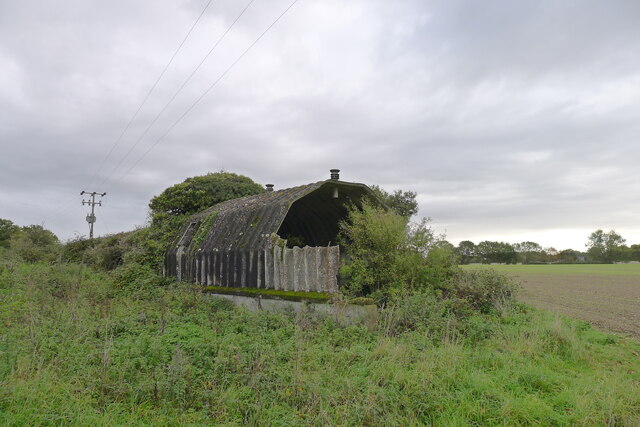
The wide, deep corrugation of asbestos-cement sheet compared with the tight wave of steel. Photo: Tim Heaton, geograph.org.uk/photo/6655153, CC BY-SA 2.0.
The colour and surface
Unpainted Super Six is a dull, matte, cement grey. It never has the sheen of steel and it does not rust. With age the surface goes chalky and the alkaline cement weathers to a mottled darker grey, often with green, orange or black patches of lichen and moss. The porous surface holds moisture, which is why old asbestos roofs are so often covered in growth. Many have been painted, so a painted roof with a wide profile still needs checking.
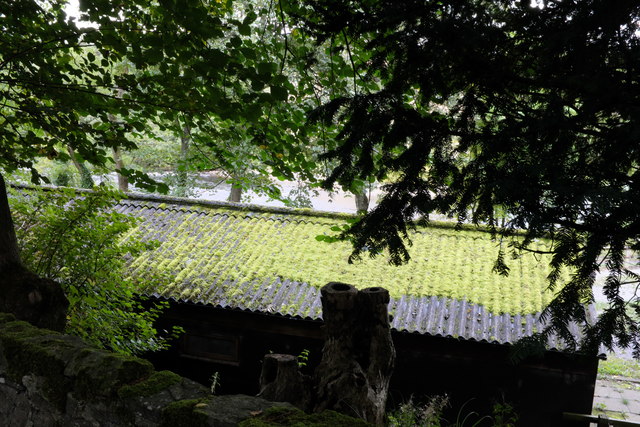
Moss and lichen thrive on the porous, weathered surface of an old asbestos-cement roof. Photo: Bob Harvey, geograph.org.uk/photo/5664427, CC BY-SA 2.0.
The edges, fixings and ridge
- Sheet edges look thick (about 6 mm) and cut, not folded like metal. Broken corners show a chalky, fibrous grey material rather than a shiny metal edge.
- Fixings are screws or bolts driven through the crest of the wave with large metal and felt washers, often with a visible dab of sealant or a plastic cap.
- The ridge capping is frequently moulded asbestos-cement too: a smooth, rounded or fluted saddle rather than a folded metal ridge. Asbestos-cement barge boards, gutters and round downpipes often go with it.
- From inside the roof cavity you may see wire netting and building paper under the sheets, which was the standard way Super Six was laid over purlins because the sheets could not be walked on.
- Sheets are heavy: roughly 15 to 17 kg per square metre, three to four times the weight of corrugated steel.

Photo: Steve Fareham
Garages, sleepouts and sheds are the most common place we find Super Six in Auckland. Even a single garage roof is well over the 10 m2 DIY limit.
How to identify Decramastic (asbestos-backed metal tile) roofs
Decramastic tiles were invented in Auckland in 1957 and became one of the most popular roofs in the country through the 1960s and 70s. They are pressed galvanised-steel panels shaped to look like a row of tiles, coated in bitumen (“mastic”) and finished with a layer of coloured stone chip. The asbestos is not in the steel. It was mixed into the bitumen coating that holds the chip on. Panels made up to the early 1980s can contain asbestos; after AHI Roofing switched to acrylic coatings around 1980, the products (later sold as Decrabond, Harveytile and today’s Gerard tiles) were asbestos-free.
Signs you are looking at a Decramastic roof
- Tile-shaped panels about 1.35 m wide and 400 mm high with a scalloped or stepped lower edge, laid in overlapping courses like real tiles but noticeably flatter and lighter.
- A rough, textured surface of stone chip rather than paint. Original colours were browns, reds, greens and greys and have usually faded badly.
- Bald patches. This is the classic sign of an original bitumen-era tile: the chip has washed or worn off, exposing shiny black bitumen underneath, especially on the sun-facing slope and along walkways.
- Dents and footprints. The thin steel dents easily, so you often see crushed tile edges where someone has walked on the roof or a satellite dish was installed.
- Rust bleeding through at cut edges, valleys and around fixings, and moss growing in the chip.
Modern stone-chip metal tiles from Gerard, Metrotile and Metalcraft look similar at a glance but are made of Zincalume steel with an acrylic base coat and have never contained asbestos. If your metal-tile roof was installed after the mid-1980s, or you can find a Gerard or Metrotile stamp, it is almost certainly fine. If it dates from the 1960s or 70s and is shedding chip, assume it contains asbestos until tested. In August 2026 WorkSafe published a safety alert about exactly this scenario: a 1970s Auckland-area home with Decramastic tiles was waterblasted before painting, and chrysotile asbestos was spread through the inside and outside of the house.
How to identify fibrolite (flat asbestos-cement sheet)
Fibrolite was James Hardie’s New Zealand name for flat asbestos-cement sheet, and Kiwis still use the word for any old fibre-cement board. It was rarely used as the main roof surface on houses, but it appears on nearly every 1940s to 1980s roofline: in the soffits under the eaves, on gable ends, as the roof and walls of garages, sleepouts and lean-tos, and as low-pitch or flat roofing on porches and carports. It is also the most common cladding on state houses and baches of the period, and lines many older bathrooms and laundries.
Signs you are looking at fibrolite
- Thin, flat, rigid grey sheets, usually painted, in panels around 1.2 m wide with visible joins.
- Joins covered by narrow cover battens, timber D-moulds or metal strips, and sheets fixed with small flat-head nails at regular spacings.
- A pattern of shallow dimples on the back of the sheet where you can see it (inside a garage, for example).
- When cracked or broken, the edge is chalky and slightly fibrous, like a dense cement biscuit, rather than the layered look of modern non-asbestos boards.
- Age. Non-asbestos Hardiflex and similar boards replaced fibrolite from the mid-1980s and are visually identical, so a sheet on a pre-1987 building should be treated as asbestos until tested.
Other places asbestos hides in an older roof
Even where the main roof surface is steel or concrete tile, older Auckland homes often carry asbestos in the parts of the roof system you do not think about. When we survey a pre-1990 house before a re-roof we routinely check the ridge and hip capping, asbestos-cement gutters and round downpipes, the flue pipe from an old wood burner or water heater, textured or stippled ceilings under the roof, malthoid bitumen waterproofing on flat and low-pitch sections, old builders’ paper, and any lagging on pipes or the hot water cylinder in the ceiling space. A rusty iron roof laid over an original Super Six or fibrolite roof is also surprisingly common, so the roof you can see is not always the whole story.
What never to do to a suspected asbestos roof
Asbestos-cement is safe enough while the fibres stay locked inside the cement. The danger comes when the surface is broken, abraded or blasted, releasing fibres into the air and onto the ground, gutters and rainwater tank. Until your roof is confirmed asbestos-free:
- Do not waterblast it. High-pressure water and compressed air must not be used on asbestos-containing materials. WorkSafe issued alerts in 2022 and again in August 2026, and can fine offenders up to $9,000 on the spot or $30,000 on conviction. Use a soft chemical wash applied at low pressure, or leave it alone.
- Do not walk on it. Asbestos-cement sheet is brittle and gets weaker with age. People fall through these roofs every year, and every footstep crushes the surface.
- Do not drill, cut, sand, grind or wire-brush it, including to fit a satellite dish, solar panel, skylight or whirlybird.
- Do not dry-sweep or vacuum the gutters. Gutters under an asbestos roof collect a sludge of weathered fibres. Wet it and lift it out, or have it done as part of a removal.
- Do not scrape moss and lichen off. Kill it with a moss treatment and let the rain do the rest.
- Do not try to remove it yourself. Anything over 10 square metres of non-friable asbestos needs a licensed removalist, and that limit applies to the whole job, not per sheet. A single-garage roof is already 18 to 40 m2.
How to know for certain: asbestos roof testing
The only way to confirm whether a roof contains asbestos is to have a small sample analysed by an IANZ-accredited laboratory using polarised light microscopy. The lab reports whether asbestos was detected and which type (chrysotile, amosite or crocidolite). A single bulk sample costs about $60 to $80 in the lab, or around $210 plus GST if you want a licensed assessor to come and take the samples for you, with results typically back in three to seven working days.
WorkSafe recommends having samples taken by a competent contractor rather than doing it yourself, and we agree, especially for a roof, because reaching the sheet safely is half the problem. If you do take a sample from a low garage roof or a broken piece on the ground, wet the spot first, wear a P2 mask and gloves, snap off a piece about the size of a $2 coin, double-bag it, and wipe the area with a damp cloth. Never sand, drill or sweep.
For most homeowners the better first step is simpler: send us a few photos. Our team identifies dozens of roofs every week and can usually tell you within a working day whether you are looking at Super Six, Decramastic, fibrolite or something harmless, and whether a lab test is worth doing before you plan any work. It costs nothing and nobody has to climb the roof.
What to do if your roof is asbestos
An intact asbestos roof is not an emergency, but it is a roof that has reached the end of its life, is legally awkward to work on, and gets more expensive to deal with as it deteriorates. Your realistic options are:
- Leave it alone and manage it. Fine for a sound, painted roof in the short term. No cleaning with pressure, no walking on it, no drilling, and disclose it if you sell.
- Encapsulate it. A specialist sealing coat can extend the life of a sound roof for some years and reduce fibre release. It is a deferral rather than a fix, cannot be applied in winter, and does not suit cracked or badly weathered sheets. See our asbestos roof encapsulation service.
- Remove and replace it. The permanent answer. As a WorkSafe Class A licensed removalist and roofing company, we strip the asbestos, vacuum the ceiling cavity, dispose of the waste at a licensed landfill with a clearance certificate, and install a new Colorsteel long-run roof, usually within five to seven working days. See asbestos roof removal and asbestos roof replacement in Auckland.
For a rough figure, use our asbestos roof removal cost calculator.
Frequently asked questions
How do I know if my roof is asbestos?
Start with the age of the building: anything built or re-roofed before the late 1980s is a candidate, and WorkSafe advises assuming asbestos may be present in any building constructed before 2000. Then look at the material. Corrugated sheets with a wide 146 mm wave, matte grey cement colour and chalky edges are Super Six asbestos-cement. Thin pressed-metal tile panels from the 1960s to early 80s shedding stone chip are Decramastic tiles with asbestos in the bitumen. Flat grey sheet with battened joins on a pre-1987 building is likely fibrolite. Only a laboratory test can confirm it.
What does a Super Six roof look like?
Super Six is corrugated asbestos-cement sheet with a much bigger wave than corrugated iron: about 146 mm crest to crest and nearly 50 mm deep, seven crests per sheet. It is a dull cement grey (unless painted), does not rust, has thick chalky edges, is fixed with bolts or screws through the crests with large washers, and is usually finished with moulded asbestos-cement ridge capping. Older roofs are typically covered in moss and lichen.
Do Decramastic tiles contain asbestos?
Decramastic tiles made from 1957 to the early 1980s often contain asbestos in the bituminous coating that holds the stone chip. The steel itself is not asbestos. Metal tiles made after AHI Roofing moved to acrylic coatings around 1980, including all Gerard, Metrotile and Metalcraft products, are asbestos-free.
Is it dangerous to live under an asbestos roof?
An intact, undisturbed asbestos-cement roof releases very few fibres and is generally considered low risk day to day. The risk rises sharply when the roof is weathered, cracked, waterblasted, drilled, sanded or removed without controls, and fibres can accumulate in gutters, soil and rainwater tanks. Managing or replacing the roof is about eliminating that future risk.
Can I test my roof for asbestos myself?
Labs in New Zealand accept homeowner samples and charge about $60 to $80 per sample, but WorkSafe recommends using a competent contractor. Sampling a roof means working at height on a brittle surface, so we suggest sending us photos first and letting a licensed assessor take any sample that is needed.
Can I remove an asbestos roof myself in NZ?
Legally, unlicensed removal is limited to 10 square metres of non-friable asbestos in total, and the limit applies to the whole job. A house roof is 100 to 200 m2 and even a small garage roof exceeds 10 m2, so in practice asbestos roof removal in New Zealand must be done by a WorkSafe-licensed removalist, who must notify WorkSafe five days in advance, follow a removal control plan and arrange a clearance inspection.
Can you waterblast an asbestos roof?
No. High-pressure water blasting and compressed-air cleaning are prohibited on asbestos-containing materials under the Health and Safety at Work (Asbestos) Regulations 2016. WorkSafe issued safety alerts in 2022 and August 2026 after homes were contaminated this way. Use a low-pressure chemical soft wash, or have the roof replaced.
How much does it cost to remove an asbestos roof in Auckland?
Published Auckland rates for licensed Class B roof removal generally sit between $50 and $150 per square metre including disposal, depending on access, height and roof type, with a full house re-roof to Colorsteel commonly landing between $25,000 and $55,000 all-in. Use our cost calculator or read our Auckland asbestos roof removal cost guide for an itemised breakdown.