
Can I Remove an Asbestos Roof Myself in NZ? The 10 m² Rule Explained
Can I remove an asbestos roof myself?
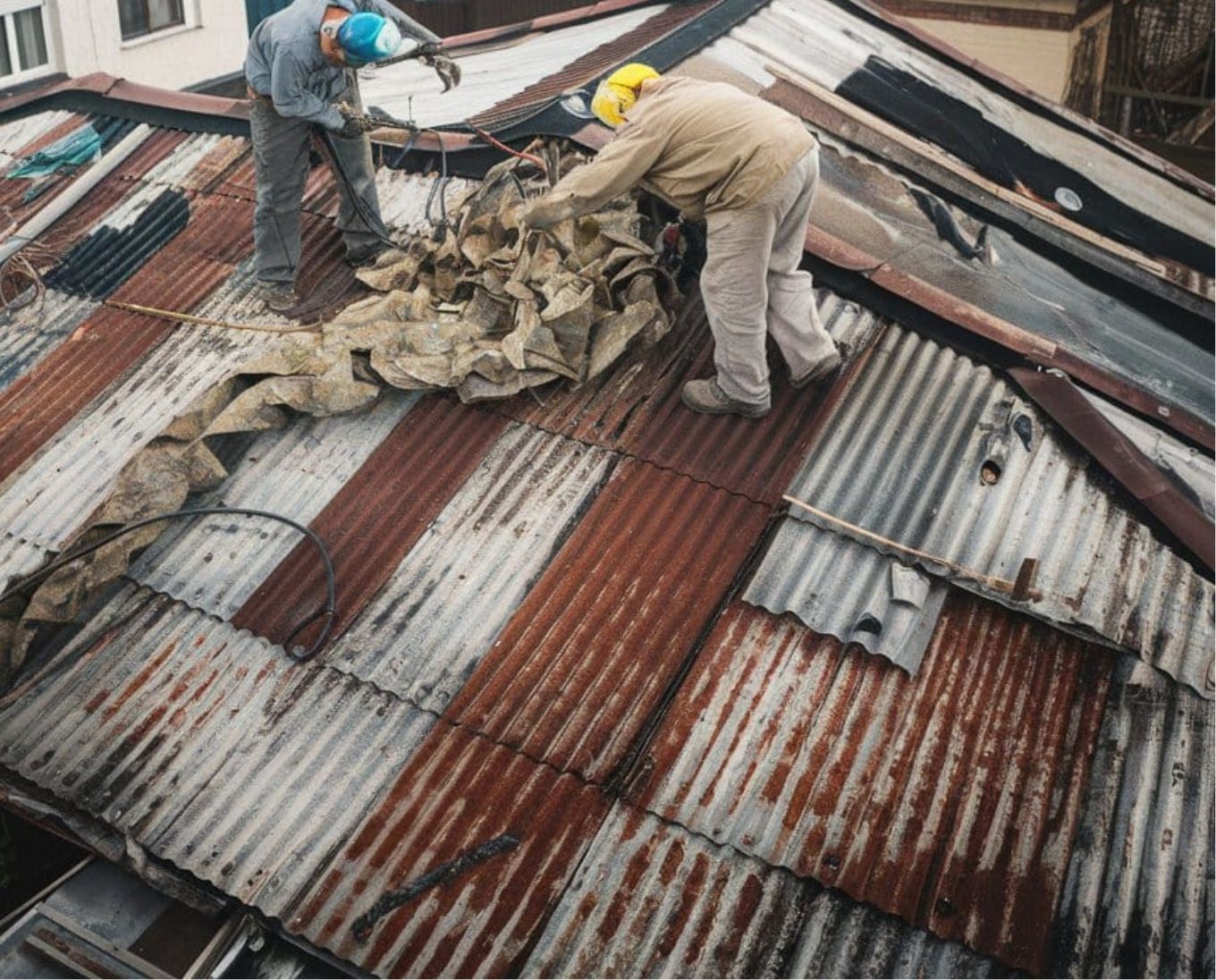
It is one of the most common questions we get, usually about a garage, sleepout or shed: “It’s only a small roof, can I just take the asbestos off myself?” The honest answer has two parts. The law in New Zealand does allow a small amount of non-friable asbestos, up to 10 square metres, to be removed without a licence, and an owner-occupier working on their own home sits largely outside the Health and Safety at Work Act. But almost no roof is under 10 m², the disposal rules still apply to everyone, your insurer almost certainly will not cover a mistake, and WorkSafe has spent 2025 and 2026 making examples of people who cut corners. This article explains exactly what the 10 m² rule says, who it binds, what happens when people ignore it, and what you are actually paying for when you hire a licensed removalist.
A single garage roof is 18 to 40 m². A house roof is 100 to 200 m². The unlicensed limit is 10 m² for the whole job, and it cannot be split into smaller stages. In practice, asbestos roof removal in New Zealand is licensed work, and even where a homeowner is technically outside the licensing rules, the disposal, insurance, health and resale consequences make DIY a bad bet. WorkSafe’s own advice is that it “strongly recommends” getting a reputable asbestos contractor to remove or work on any asbestos in your home.
Request A free Quote Today!
What the 10 square metre asbestos rule actually says
The rule comes from the Health and Safety at Work (Asbestos) Regulations 2016, which took effect on 4 April 2016. Regulation 27 says that a person conducting a business or undertaking (a PCBU) who commissions asbestos removal must use a licensed asbestos removalist, unless the asbestos to be removed is, in the regulation's own words, "cumulatively over the whole course of the removal project for the site, 10 m² or less of non-friable asbestos". Regulation 56 mirrors this from the removalist's side: nobody may remove more than 10 m² of non-friable asbestos at a workplace without a Class B or Class A licence. Friable asbestos (anything that crumbles by hand when dry) needs a Class A licence in any quantity.
Three words in that sentence do most of the work. "Non-friable" means bonded material such as asbestos-cement sheet, so Super Six roofing, fibrolite and asbestos-cement gutters qualify while damaged, weathered or broken sheet may not. "Cumulatively" means the limit is a total for the project, not a daily allowance. And "site" means the property, so a garage roof done over two weekends is one project.
WorkSafe's Asbestos Removal Good Practice Guidelines, reissued in April 2026, close the loophole people ask about most. In their words: "the 10m² restriction applies cumulatively to the whole asbestos removal project for the site", and "these requirements cannot be avoided by dividing a large site into sectors of 10m² or less and removing asbestos from each sector." The companion Interpretive Guidelines add: "Do not divide a work site into subsites or a project divided into subprojects to circumvent this restriction."
Even under 10 m², the regulations are not a free pass. Regulation 27(3) requires the work to be done by a "competent person", defined as someone with "the knowledge, experience, skills, and qualifications to carry out a particular task", who has been trained in asbestos identification, safe handling and control measures under Regulation 17. WorkSafe's information sheet on removing a single asbestos-cement sheet or gutter spells out the method: hand tools only (a screwdriver, wrench or bolt cutters), keep the material wet with a low-pressure sprayer, never drop sheets or use rubble chutes, and double-wrap the waste in heavy-duty polythene with tape and warning labels. Its closing line on roofs is the point: "If the amount of asbestos cement to be removed is more than 10m2, the removal must be done by a licensed removalist."
Why a roof is never really a 10 m² job
Ten square metres is a patch of roof about 3 metres by 3.3 metres. Compare that with what people actually want to remove:
| Building | Typical roof area | Under 10 m²? |
|---|---|---|
| Garden shed or lean-to | 6 to 12 m² | Sometimes, but only if there are no other asbestos materials on the site being removed |
| Single garage (3 m x 6 m floor) | 18 to 24 m² once pitch and overhang are added | No |
| Double garage or sleepout | 36 to 50 m² | No |
| Carport or porch roof | 10 to 25 m² | Rarely |
| Three-bedroom house | 100 to 200 m² | No, by a factor of ten or more |
| Commercial or farm building | 200 m² and up | No |
Add the asbestos-cement ridge capping, gutters, downpipes and soffits that usually come with a Super Six roof, and the cumulative area climbs further. That is why every roofing and removal firm in Auckland treats asbestos roof removal as licensed work, and why we tell homeowners that the rule is really about single sheets, fence panels and small repairs, not roofs.
Does the rule apply to homeowners doing their own work?
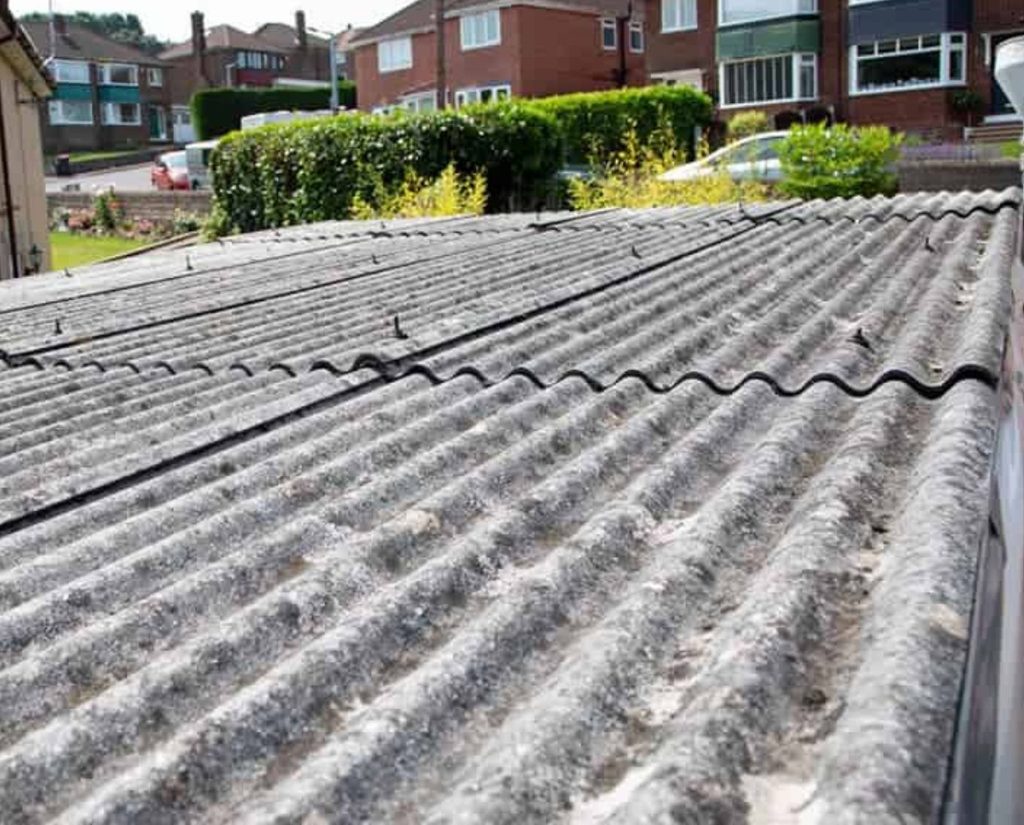
This is where most online answers get it wrong in one direction or the other, so here is the position as WorkSafe itself describes it. The Health and Safety at Work Act places duties on PCBUs, their officers and workers. In a 2022 safety alert WorkSafe stated plainly that "homeowners who occupy and live in the dwelling where work is taking place do not have a duty under the Health and Safety at Work Act 2015. The duty lies with those doing the work on the dwelling." So an owner-occupier stripping their own garage roof, alone, is not committing an offence under the licensing regulations in the way a tradesperson would be.
That is the end of the good news, because the moment any of the following applies, the full regime does too:
- You pay anyone to help. A mate on a cash job, a handyman, a builder or a roofer is a PCBU, and WorkSafe's guidance says that "if you pay someone to undertake work on asbestos in your home or on your property, it becomes a workplace for the duration of the work."
- You are a landlord. WorkSafe's policy is explicit: "a landlord is the person conducting a business or undertaking (PCBU)". Landlords must identify asbestos at the property, hold an asbestos management plan for any work that could disturb it, and use a licensed removalist for anything over 10 m².
- The property is a business, farm, body corporate, church, school or commercial building. Every one of these is a PCBU.
- You plan to sell. A DIY removal leaves you with no clearance certificate, no disposal receipts and a contamination question that a building inspector or buyer's lawyer is entitled to ask about.
And even for the owner-occupier who is technically outside the Act, WorkSafe's homeowner guidance could not be clearer: "Attempting to remove or work on asbestos materials without specialist training is extremely dangerous. It can create a major health hazard for you and others in your home." WorkSafe "strongly recommends that you get advice from a reputable asbestos contractor if you need to remove or work on any asbestos material in your home."
The rules that bind everyone: disposal, water blasting and power tools
Whatever your status under the Act, three sets of rules apply to the material itself, and they are the ones that catch DIY removers out.
Disposal
Asbestos waste must go to a facility approved to take it, double-wrapped in 200-micron polythene, sealed, and labelled. Auckland Council's position is blunt: "Transfer stations in Auckland do not accept asbestos", and it directs householders to use a professional removal company. A May 2026 industry survey of 234 waste facilities nationwide found only 6 percent accept asbestos from the general public and 89 percent accept none at all. The regulations make improper disposal an offence carrying a fine of up to $20,000 for an individual and $100,000 for a company, and a landfill that finds asbestos in general waste will trace the load. The practical result is that a DIYer with a trailer of Super Six has nowhere legal and affordable to take it, which is exactly why asbestos keeps turning up dumped on rural roadsides. Our guide to asbestos disposal in Auckland explains where it can legally go.
Water blasting and compressed air
Regulation 18 prohibits using a high-pressure water spray (anything over 350 kPa, or about 50 psi) or compressed air on asbestos-containing material. WorkSafe says an individual or business "can be infringed up to $9000 or upon conviction in court can be fined up to $30,000" for doing so. The reason was on display in August 2026, when WorkSafe issued a fresh safety alert after a 1970s home with Decramastic tiles was water blasted before painting; testing confirmed chrysotile asbestos, and the fibres contaminated the inside and outside of the house, requiring specialist remediation.
Power tools
Grinders, circular saws, drills and sanders may only be used on asbestos where the material is wetted and the tool captures or suppresses the dust. In practice, licensed removalists lift Super Six sheets whole by cutting or undoing the fixings by hand. WorkSafe's roof guidance adds: "Asbestos sheeting should be removed intact. The breaking and cutting of asbestos sheets shall be avoided as this will release asbestos fibres that are harmful when inhaled."
The other reason not to climb up there: the roof will not hold you
People focus on fibres and forget gravity. WorkSafe's Working on Roofs guidelines classify asbestos-cement as a brittle roof, warn that "the majority of brittle roofs are made from asbestos cement" and that the sheeting "is liable to shatter without warning under a person's weight." Licensed crews work off crawl boards at least 450 mm wide, roof ladders, edge protection and, on larger jobs, safety nets. A homeowner standing on a fifty-year-old Super Six sheet has none of that, and falls through fragile roofs remain one of the most common serious injuries in New Zealand construction.
What happens when people ignore the rules: 2025 to 2026 enforcement
WorkSafe has become noticeably more active on asbestos since it overhauled its guidance in April 2026, describing asbestos as "the number one cause of work-related death in New Zealand, with approximately 220 people dying from asbestos-related disease each year." Three recent cases show the direction of travel.
March 2025: unlicensed removals dressed up as licensed work
Barrie Crockett, a project manager with more than 25 years in the asbestos industry, was sentenced in the Auckland District Court after invoicing three customers on his employer's letterhead for asbestos removal he carried out himself, without a licence, pocketing $21,938. He received 140 hours of community work and was ordered to pay $15,000 in reparation. WorkSafe's Kate Morrison said: "Licensing exists for a reason and removal work is tightly regulated to ensure safety. Circumventing the rules is both reckless and deceitful." The lesson for homeowners is to check the licence, not the letterhead: every licensed removalist is on WorkSafe's public register.
May 2026: $32,000 for ignoring a stop-work notice
A Palmerston North property owner, Sanal Lonappan, was fined $32,000 after continuing to strip asbestos-containing soffit linings from a canopy directly above a public footpath despite a WorkSafe prohibition notice, removing the notices from the entrances and ignoring requests for information. WorkSafe's Carl Baker: "When we issue a prohibition notice, work must stop immediately. That notice exists because there is a risk of serious harm. It is a legal requirement, not a suggestion." By July 2026 the same owner faced further charges from Kāpiti Coast District Council over earthworks involving asbestos contamination at a second property.
August 2026: the water blasting alert
WorkSafe's 20 August 2026 alert followed several notifications of roofs containing asbestos being water blasted, most recently the Decramastic-tiled 1970s home described above. Its wording leaves no room: "high-pressure water spraying (including water blasting) must not be used on asbestos or ACM. Likewise, compressed air must not be used on asbestos. Both are specifically prohibited under the Asbestos Regulations."
For scale, the general penalties under the Health and Safety at Work Act are far larger than the asbestos-specific fines: an individual who exposes others to a risk of serious harm faces a fine of up to $150,000 under section 48, a PCBU individual up to $300,000, and a company up to $1.5 million.
What a licensed asbestos roof removal actually involves
When you get a quote for licensed asbestos roof removal in Auckland, this is what the price covers, and it is the checklist you can use to judge any contractor:
- Confirmation of the material. Where it has not already been tested, a sample goes to an IANZ-accredited lab so the removal is planned for the right material. See our asbestos testing service.
- Written notice to WorkSafe at least five days before the work starts (Regulation 34). No notification means no licensed job.
- An asbestos removal control plan describing how the sheets will be removed, the removal area, the controls, and how the waste will be transported and disposed of (Regulation 32).
- Site set-up: warning signs and barriers, controlled access, and decontamination facilities for workers and equipment (Regulations 36 to 38).
- Removal by trained workers in disposable coveralls and P2 or P3 respirators, working off crawl boards, keeping sheets wet with low-pressure spray, undoing fixings by hand and lowering sheets intact rather than dropping them.
- Waste handling: sheets double-wrapped in 200-micron polythene, sealed, labelled as asbestos, and transported to an approved landfill with disposal records you keep (Regulations 39 and 40).
- A clean-down of the roof cavity, gutters and surrounding ground, then an independent clearance inspection and certificate confirming the area is free of visible contamination (Regulation 43). For friable (Class A) work, air monitoring is mandatory as well.
- Documentation for your file: the WorkSafe notification, the control plan, disposal receipts and the clearance certificate. These are what a buyer, insurer or building inspector will ask for later.
DIY versus licensed removal: the real cost comparison
The argument for DIY is always money, so it is worth pricing honestly. Published New Zealand rates for licensed Class B removal of asbestos-cement roofing sit in the range of $50 to $150 per square metre including disposal, which puts a typical single-garage roof at roughly $1,700 to $5,000 and a full house roof at $4,000 to $15,000 for removal only. Our asbestos roof removal cost calculator gives a figure for your roof size and type, and the Auckland asbestos roof removal cost guide breaks down what drives the price.
| Cost item | Licensed removalist | DIY |
|---|---|---|
| Labour and removal | Included; 1 to 3 days for a garage | Your weekend, at height, on a brittle roof |
| PPE, polythene, tape, labels, sprayer | Included | $150 to $400 for single-use kit done properly |
| Transport and landfill disposal | Included, with receipts | Few facilities accept public asbestos; if one does, expect to pay by weight plus a trailer hire, and to be turned away if wrapping is wrong |
| WorkSafe notification, control plan, clearance certificate | Included | Not available; no documentation for sale or insurance |
| Contamination of ceiling cavity, gutters, soil, neighbours | Controlled and cleaned | Specialist remediation of a contaminated house is priced by licensed removalists and commonly runs into the tens of thousands |
| Insurance | Contractor carries public liability | Standard home policies generally exclude any loss or liability arising from asbestos |
| Fines | Not applicable | Up to $9,000 infringement or $30,000 on conviction for water blasting; up to $20,000 for improper disposal; far more under the Act if others are exposed |
| Resale | Clearance certificate on file | Disclosure obligation with nothing to show |
| Health | Exposure controlled and monitored | Exposure to you and your family that cannot be undone |
Once you price the disposal problem and the downside risk properly, the saving from stripping a garage roof yourself is usually a few hundred dollars against a potential liability in the tens of thousands, on top of the health risk. That is why even tradespeople who could legally do small jobs send roofs to licensed asbestos removalists.
Frequently asked questions
Can I remove an asbestos roof myself in NZ?
Legally, unlicensed removal is limited to 10 m² of non-friable asbestos in total for the whole project, and even that must be done by a trained, competent person. A garage roof is 18 to 40 m² and a house roof 100 to 200 m², so asbestos roof removal is licensed work in practice. An owner-occupier working alone on their own home falls outside the Health and Safety at Work Act, but the disposal rules, the water blasting ban, insurance exclusions and WorkSafe's strong recommendation to use a contractor all still apply.
What is the 10 square metre asbestos rule?
Regulation 27 of the Health and Safety at Work (Asbestos) Regulations 2016 allows a PCBU to have up to 10 m² of non-friable asbestos removed without a licensed removalist, measured "cumulatively over the whole course of the removal project for the site". Anything more, and any friable asbestos, needs a Class B or Class A licensed removalist. WorkSafe's guidelines state the limit cannot be avoided by splitting the job into smaller sections.
Does the 10 m² rule reset each day or each visit?
No. The limit is cumulative for the whole project at the site. A 24 m² garage roof done over three weekends is one 24 m² job and requires a licensed removalist.
Can I take asbestos roof sheets to the tip in Auckland?
No. Auckland Council states that transfer stations in Auckland do not accept asbestos and directs householders to licensed removal companies. Asbestos must be double-wrapped, labelled and taken to an approved landfill; improper disposal carries a fine of up to $20,000 for an individual.
What are the fines for illegal asbestos removal in NZ?
Under the Asbestos Regulations, water blasting or using compressed air on asbestos carries an infringement of up to $9,000 or a fine of up to $30,000 on conviction, failing to notify WorkSafe of licensed work up to $6,000 for an individual, and improper disposal up to $20,000 for an individual or $100,000 for a company. Under the Health and Safety at Work Act, exposing others to a risk of serious harm carries fines of up to $150,000 for an individual, $300,000 for an individual PCBU and $1.5 million for a company.
Do I need a Class A or Class B removalist for a roof?
Intact asbestos-cement roofing is non-friable, so a Class B licence is sufficient. Badly weathered or broken material can be treated as friable and requires Class A. A Class A licence covers both, which is why we hold one.
How do I check whether a removalist is licensed?
Search WorkSafe New Zealand's public asbestos removalist register for the business name, and ask to see the licence and the WorkSafe notification for your job. The 2025 Crockett prosecution involved an unlicensed operator using a licensed employer's paperwork, so check the licence holder matches the company you are paying.
How much does licensed asbestos garage roof removal cost?
Published New Zealand rates for licensed removal of asbestos-cement roofing are roughly $50 to $150 per square metre including disposal, which puts a single garage roof at about $1,700 to $5,000. Use our cost calculator for a figure based on your roof.