
Fibrolite, Supertite And James Hardie: Identifying NZ Asbestos Brands

Knowing which brand you’re looking at tells you a surprising amount about what a product is, when it was made, and whether it’s even the same thing being sold under that name today.
Request A free Quote Today!
James Hardie: The Company Behind Most Of It
James Hardie is the manufacturer, not a product name in its own right, and it sits behind the large majority of asbestos-cement building material used in New Zealand homes from the 1940s through the 1980s. We've covered the company's Penrose factory history in more depth, but the short version is that Hardie ran New Zealand's dominant fibre-cement operation for close to fifty years, selling under a handful of trade names rather than its own company name on the product itself. That last point trips a lot of people up. Someone can own a house full of Hardie-made material and never see the words "James Hardie" printed anywhere, because the branding sat on the product name, not the manufacturer. Search James Hardie and what you're really asking about is a company that operated under several different trading names at once, each covering its own slice of the building.
How To Spot A Hardie-Era Product On Your Property
A few clues help narrow things down before you ever get to testing. Original branding stamps sometimes survive on the underside or reverse of a sheet, out of the weather, even after decades of paint on the visible face. Sheet thickness and edge profile are another tell. Genuine asbestos-cement flat sheet has a distinct density and a slightly rougher cut edge compared with the smoother, lighter fibre-cement sold today. Location on the property matters too. Eaves, soffits, gable ends and bathroom or laundry linings were classic Fibrolite territory in New Zealand homes from the 1950s through the 1970s, precisely because those areas needed something fire-resistant and moisture-tolerant that could be cut to size on site. If your home has any of these original features and dates from that window, there's a reasonable chance you're looking at a Hardie product, whatever it happens to be called on the invoice, if one even survives.
Fibrolite: The Name On Almost Everything
Fibrolite is the big one. It was Hardie's umbrella brand for asbestos-cement sheet products, covering flat sheet for cladding, soffits and internal linings, corrugated roofing, and even moulded pipe fittings for water supply. If you've read our piece on Super Six roofing, that corrugated product sits inside the Fibrolite range too. Different shape, same manufacturer, same underlying asbestos-cement composition. Fibrolite is also, confusingly, still a term people use loosely today for any fibre-cement sheet, asbestos-containing or not. That's the single biggest identification trap with this brand name: hearing "Fibrolite" tells you the product family, not necessarily the era or the composition, since the name outlived the asbestos formulation it started with.
Supertite: The Pipe Fitting Brand Most People Have Never Heard Of
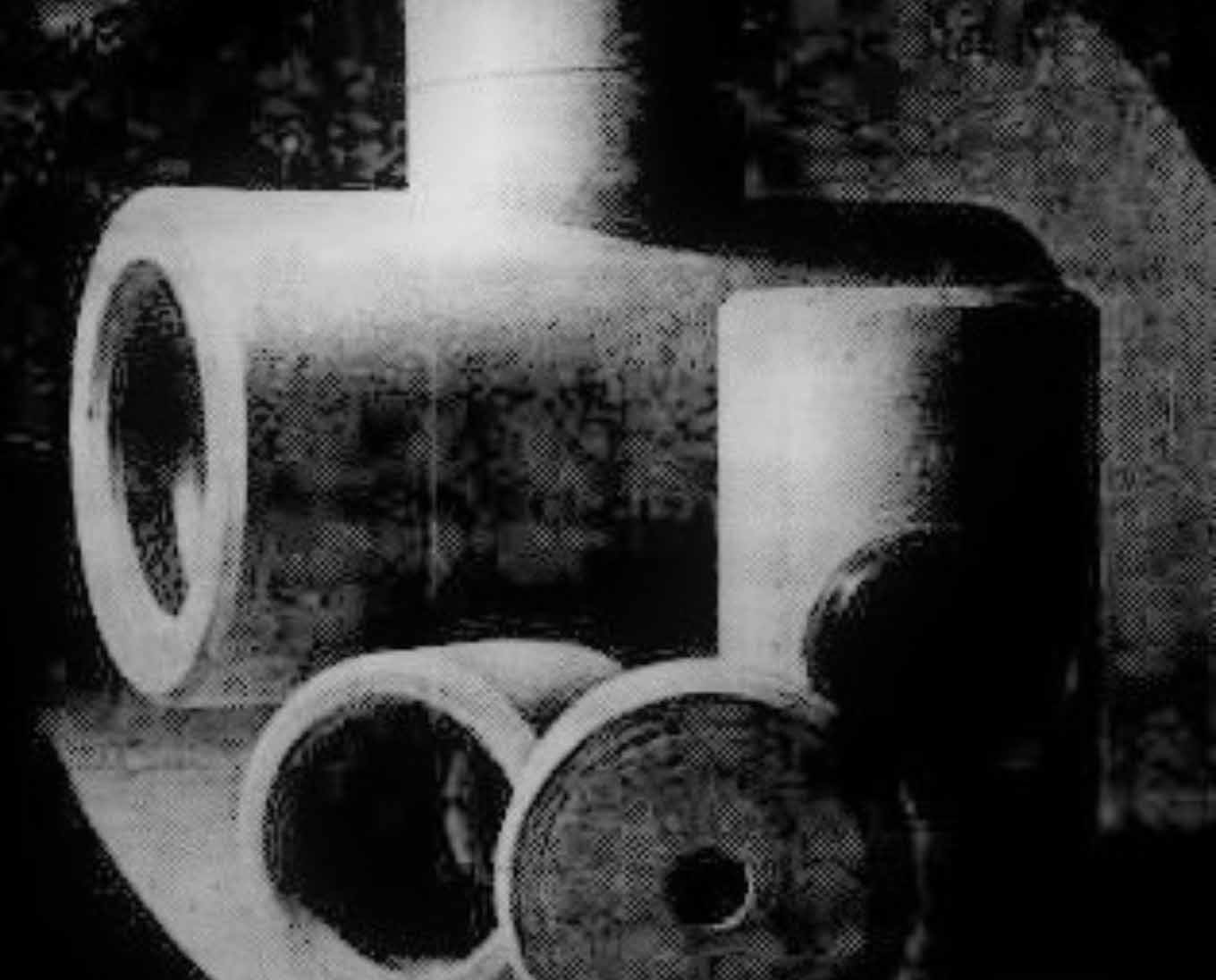 This one is genuinely obscure, and it's not a cladding or roofing product at all. Supertite was a moulded asbestos-cement fitting brand, introduced around 1963 for connecting sections of asbestos-cement pipe, think tees, reducing couplings, closed couplings, tapped couplings and irrigation outlets rather than anything you'd see on a house exterior. It was used heavily in rural and irrigation water schemes, and in some town water reticulation as well, sitting underground rather than on a roof or wall. Hardie introduced Supertite alongside Fibrolite-branded fittings at roughly the same time, so the two names turn up side by side in old plumbing and irrigation records from the same manufacturer. This is exactly the kind of product that gets missed. A homeowner or contractor checking a property for asbestos will usually look at the roof, the cladding and maybe the ceiling, and never think to ask about what's connecting the pipes under the lawn or the paddock. On lifestyle blocks, orchards and older farms across the wider Auckland region, Supertite and similar AC fittings can still turn up during irrigation repairs, fence line digging or general groundwork, often as a complete surprise to whoever's holding the shovel. If you're doing any excavation on a rural or older semi-rural property and hit old pipe or fittings you don't recognise, that's worth treating with the same caution as broken roofing sheet, not brushing off as "just old pipe."
Other Brand Names Worth Recognising
Fibrolite and Hardie dominate the conversation, but they're not the only names that turn up on older New Zealand fibre-cement. Villaboard, Hardiflex and Hardiplank cover various flat sheet and weatherboard-style cladding profiles, while imported products like Versilux, Tilux and Durock also made their way into New Zealand builds, particularly from the 1960s onward. Some of these came in from overseas manufacturers whose exact origins are now genuinely difficult to trace, since building product substitution before final construction was common and rarely documented. This split often tracks how a property was built in the first place. Standard state housing and project homes tended to use whatever the builder's usual supplier stocked, which in practice meant Hardie products more often than not. Architect-designed or owner-built homes were more likely to specify an imported alternative, chasing a particular look, price point or supply availability at the time. Neither pattern is a hard rule, just a reasonable starting assumption when you're trying to work out what you're looking at. This is the part where honesty beats a tidy answer. Some brand names on an older property simply aren't traceable, and that's fine. It doesn't change what you need to do next, which is test the material rather than the label.
Why The Brand Name Matters (And Why It Sometimes Doesn't)
Here's the twist that catches people out. Several of these names are still in use today on entirely different, asbestos-free products. Villaboard and Hardiflex, for example, are current James Hardie product lines sold new, using modern fibre cement with no asbestos content whatsoever. So finding "Hardiflex" stamped on a product tells you almost nothing on its own. What matters is when it was installed, well ahead of what it happens to be called. That's why brand identification is a starting point rather than an answer. Knowing you're looking at Fibrolite or a Hardie-era product narrows down the likely era and composition, which is genuinely useful information. It just can't replace an actual test, especially once you're dealing with a brand name that's had a second life as a completely different, safe product. Picture two neighbouring garages clad in what looks like identical grey sheet, one built in 1975 and one re-clad in 2021. Both could plausibly carry a "Hardiflex" invoice somewhere in their paperwork, yet only one of them carries any asbestos risk at all. From the street, they're indistinguishable. That gap between what a product is called and what it really contains is precisely why we treat the brand name as a clue rather than a verdict.
What This Means For Testing And Removal
If you've identified one of these names on your property, whether it's Fibrolite sheet on the eaves, an old Supertite fitting turning up during groundwork, or a cladding brand you can't quite place, the next step is the same regardless: asbestos testing on the specific material, not a decision based on the name alone. If testing confirms asbestos in a roof product, our asbestos roof removal service handles it under full containment. And whatever comes out of a job like this, whether it's old sheet, broken pipe fittings or general demolition material, needs to go through proper asbestos disposal rather than an ordinary skip or scrap run.
Common Questions About These Brand Names
Does Fibrolite always contain asbestos?
Not always. Fibrolite was Hardie's asbestos-cement brand for decades, but the name has also been used loosely for non-asbestos fibre cement. The only way to know for a specific piece of material is to test it.
Is every James Hardie NZ product from this era asbestos?
The company's older asbestos-cement products, sold under names like Fibrolite, generally were. Its current product range, including names like Villaboard and Hardiflex, is asbestos-free. Age and installation date are a far bigger clue than the brand name by itself.
What is Supertite, and should I be worried about it?
Supertite was a moulded asbestos-cement pipe fitting brand from around 1963, used mainly in rural and irrigation water systems. If you're doing groundwork on an older property and come across old pipe fittings, treat them with the same caution as any other pre-1990s asbestos-cement material until they're tested.