
Do I Need Building Consent to Replace an Asbestos Roof in Auckland?
Building Consent Requirements to Replace an Asbestos Roof
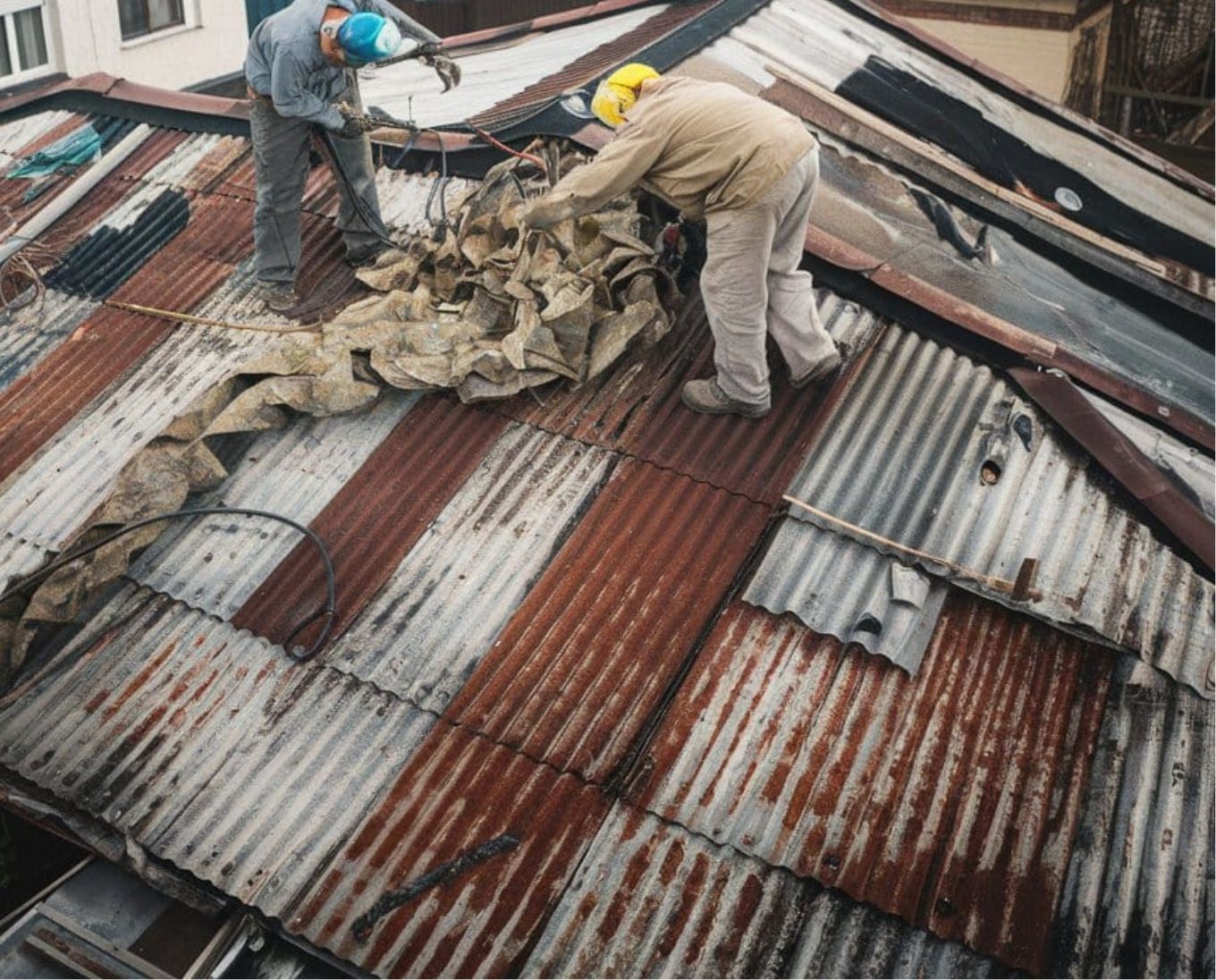
Most Auckland homeowners replacing an asbestos roof assume they will need a building consent, and a surprising number of tradespeople tell them so. In most cases they will not. Replacing an old Super Six or Decramastic roof with new long-run steel is usually exempt building work under Schedule 1 of the Building Act 2004, provided the old roof has done its time and the new one is a comparable product in the same position. But there are exceptions that catch people out, a 15-year rule that confuses everyone, and a separate set of asbestos requirements from WorkSafe and Auckland Council that apply whether or not a consent is issued. This guide sets out the rules as MBIE and Auckland Council actually publish them, so you can budget and plan with confidence. If you are not yet sure your roof is asbestos, start with our identification guide.
Request A free Quote Today!
The rule that makes most re-roofs exempt: Schedule 1, Exemption 1
Schedule 1 of the Building Act 2004 lists building work that can be done without a consent. The first item on that list, Exemption 1, covers general repair, maintenance and replacement. As reprinted in MBIE's official guidance, it exempts the "replacement of a building product or an assembly incorporated in or associated with a building, provided that (a) a comparable building product or assembly is used; and (b) the replacement is in the same position."
The same exemption then carves out four things that are not covered. Two matter for roofs: "complete or substantial replacement of a building product or an assembly contributing to the building's structural behaviour", and "repair or replacement (other than maintenance) of a building product or an assembly incorporated in or associated with a building that has failed to satisfy the provisions of the building code for durability".
MBIE's guidance, updated in January 2026, gives worked examples. It lists as exempt an owner who "replaces 20-year-old profile metal roof cladding, where that cladding has achieved its Building Code durability requirement (lasted more than 15 years) and the replacement cladding is a comparable component or assembly." More usefully for asbestos roofs, it also lists as exempt an owner who "replaces an old clay tile roof with a profiled metal roof (such as longrun roofing or pressed metal tiles) in the same position", noting only that the lighter roof means "issues such as how to deal with potentially higher uplift forces must be considered" and that the owner can use NZS 3604 to show compliance. In MBIE's words, that job "is not considered to be complete or substantial replacement of a component or assembly that contributes to the building's structural behaviour", so it "falls within the scope of this exemption."
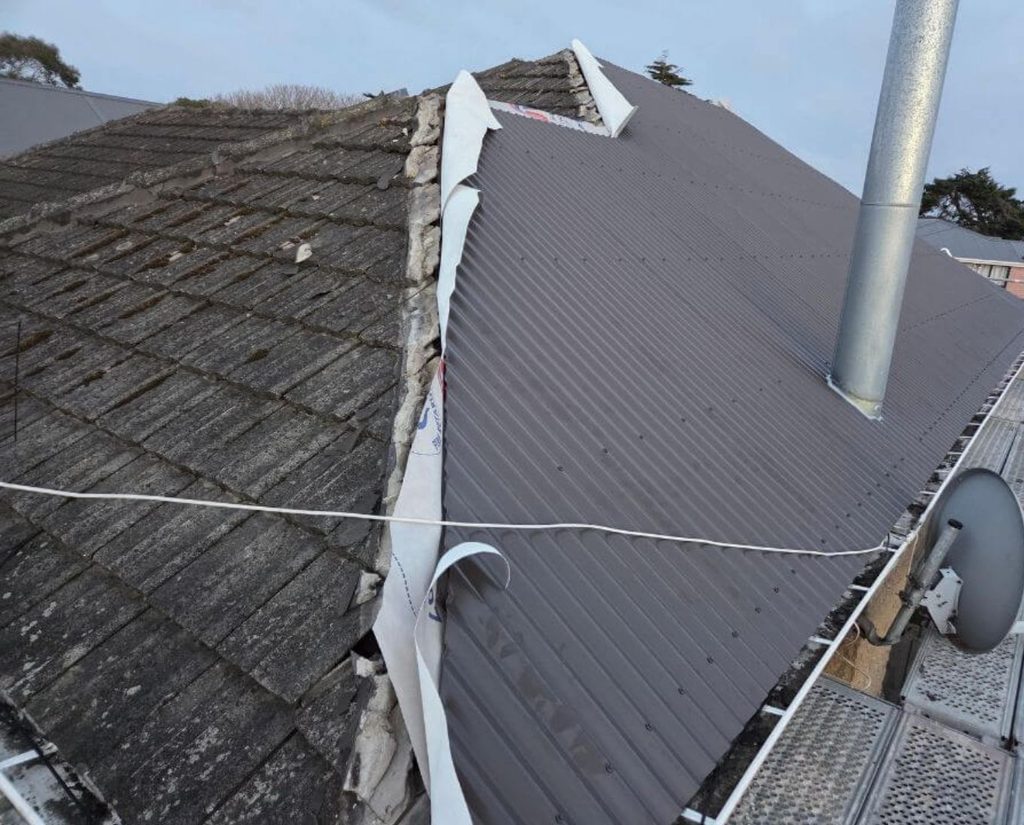
Asbestos-cement roofing to long-run steel is the same kind of change as clay tile to long-run steel: a lighter, comparable roof cladding doing the same job in the same position on the same framing. That is why the industry treats a standard asbestos re-roofing to long-run steel as exempt work, and why the LBP Codewords guidance from December 2025 says simply that "replacing a roof with a similar product in the same position is exempted building work."
The 15-year durability rule explained
The 15-year figure is not in Schedule 1 itself. It comes from Building Code clause B2 Durability, which requires roof cladding to last at least 15 years. MBIE's guidance on recladding roofs puts it this way: "if a roof fails within the first 15 years, it did not meet its initial durability requirement. It therefore cannot be automatically replaced without a building consent." The logic is that a roof which failed early may have been poorly designed or installed, and a consent makes sure the replacement does not repeat the mistake.
The flip side is the part homeowners need: "the amendments to Schedule 1 or the need to obtain a building consent do not apply for repair work or normal re-roofing where a roof is more than 15 years old. No building consent would be needed if a 'like-for-like' or similar roof cladding is being installed for such roofs." Every asbestos-cement roof in Auckland is at least 35 years old, and most are 50 or more, so the 15-year rule works in your favour. It only bites when the roof being replaced is a young one that has failed, which is why the LBP quiz example of a leaking 12-year-old membrane roof being replaced with corrugated steel needs consent.
When replacing an asbestos roof does need building consent
The exemption is generous, but it is conditional. Consent is required, or very likely required, in the following situations:
| Situation | Consent? | Why |
|---|---|---|
| Super Six or Decramastic to long-run steel, same position, same framing, roof over 15 years old | No (exempt) | Comparable product, same position, durability met. Exemption 1. |
| Steel or asbestos-cement to concrete or clay tile | Yes | A heavy roof (over 20 kg/m² under NZS 3604) imposes new loads. MBIE's example of corrugated iron replaced with concrete tiles "is likely to substantially affect the building's structural behaviour". |
| Replacing purlins, rafters or trusses wholesale, or altering the pitch or roof shape | Yes | Substantial replacement of structure is excluded from Exemption 1. Replacing a few rotten purlins as maintenance is not. |
| Adding a skylight, roof window, dormer or new penetration | Likely yes | Schedule 1 has no exemption for new roof windows; the window exemption covers walls in existing dwellings only. |
| Adding roof-mounted solar panels | No, up to 40 m² in a wind zone no greater than high | New Exemptions 28D and 48A from 23 October 2025; larger arrays or very high wind zones need a Chartered Professional Engineer. |
| A leaking roof less than 15 years old | Yes | It failed its B2 durability requirement. |
| Special character area or scheduled heritage building under the Auckland Unitary Plan | Building consent may be exempt, but resource consent may be needed | Restoration and repair are permitted activities; a change of material can be an external alteration requiring resource consent. Check with council planning first. |
| Re-roofing as part of a larger consented job (extension, reclad, second storey) | Yes, within that consent | The roof is part of the consented work and Auckland Council's asbestos practice note then applies. |
Two further points apply even when no consent is needed. First, section 17 of the Building Act still requires the work to comply with the Building Code; as Auckland Council's exempt work guidance says, "all building work must comply with the Building Code to the extent required by the Act whether or not a building consent is required." That means proper underlay, fixings for the wind zone, flashings to E2 and a minimum pitch of 8 degrees for corrugated steel. Second, restricted building work rules (the requirement to use a Licensed Building Practitioner and receive a Record of Work) apply only when a consent is required, so an exempt re-roof does not legally need an LBP, but a competent roofer following the NZ Metal Roofing Manufacturers Code of Practice is still the difference between a 50-year roof and a leaking one.
What Auckland Council practice note AC2262 says about asbestos
Auckland Council's practice note AC2262 "Asbestos" (version 2, October 2023) is often quoted as if it were a consent rule for asbestos roofs. It is not. Its stated purpose is "to provide guidance and raise awareness of the dangers associated with asbestos", and it applies to consented building work where asbestos is present or discovered. Its key points are still worth knowing, because they describe what the council expects to see whenever asbestos is involved:
- Age is the trigger for suspicion. The note states that a building constructed "before mid-1980s" is "very likely to have materials containing asbestos", one built "between mid-1980s and 1990" is "likely" to, and after 1990 "unlikely".
- "An asbestos removal plan is developed by an approved asbestos removal contractor whenever any ACM is to be removed."
- "The contractor must notify WorkSafe NZ when such work is carried out."
- "A copy of the asbestos clearance certificate must be sighted by an Auckland Council Inspector following the removal" and must be "included with the CCC application."
So if your asbestos re-roof is part of a consented project, expect the inspector to ask for the removal control plan and the clearance certificate before the Code Compliance Certificate is issued. If the re-roof is exempt, the council is not involved, but the same WorkSafe requirements apply through the Health and Safety at Work (Asbestos) Regulations 2016: any roof over 10 m² must be removed by a licensed removalist, WorkSafe must be notified at least five days in advance, and the job ends with an independent clearance inspection. Our 10 m² rule article explains those obligations in detail.
Not sure? Two ways to get certainty from Auckland Council
If your building is unusual (commercial, heritage, multi-unit, or a roof with structural quirks) there are two formal routes:
- Apply for a discretionary exemption under Schedule 1, Exemption 2. The council can decide that a consent is not necessary because "the completed building work is likely to comply with the Building Code". Auckland Council's current base fee for an exemption application is $515 (non-refundable, and you must supply the same level of detail as a consent application). This is the sensible route for a commercial asbestos re-roof.
- Apply for a building consent. The council has a statutory 20 working days to decide once it has all the information, and Auckland Council's median in early 2026 was 16 working days. Fees are charged on deposit plus hourly processing and inspection time (currently $195 per hour for simple residential work), so expect a few thousand dollars for a straightforward re-roof consent including the CCC.
Whichever route you take, or if the work is exempt, MBIE recommends lodging the details with the council anyway: "you should formally notify your council and provide them with any relevant documentation (such as drawings, specifications and photographs) if you have completed exempt building work." Auckland Council will place exempt-work records on your property file for a small administrative charge. When you sell, a buyer's lawyer will see a documented re-roof with a clearance certificate rather than an unexplained new roof, and that is worth far more than the fee.
What we do on every asbestos re-roof
Because we are both a WorkSafe Class A licensed asbestos removalist and a roofing company, one crew handles licensed asbestos roof removal and the new roof, with the compliance managed from start to finish. On a standard exempt job that means confirming the work is within Exemption 1 before we quote, notifying WorkSafe, working to a removal control plan, arranging the independent clearance certificate, and installing the new Colorsteel roof to the NZ Metal Roofing Manufacturers Code of Practice with the manufacturer's warranty. Where a consent or exemption is needed, we tell you at quote stage, prepare the roofing documentation the council asks for, and provide the clearance certificate for the CCC. You receive a complete record pack at the end: WorkSafe notification, control plan, disposal receipts, clearance certificate, roofing warranty and photographs.
Planning an asbestos re-roof?
We will tell you at quote stage whether your job is exempt, needs an exemption application or needs a consent, and handle the WorkSafe side either way. Call 09 622 8299, or request a free quote for asbestos roof replacement in Auckland. For a rough figure first, try the asbestos roof removal cost calculator.